
გურამ ქარაზანაშვილის რობოტული ცენტრი
  • GURAM KARAZANASHVILI ROBOTIC CENTER
(+995) 322 23 40 23
No Result
View All Result
  • Home
  • About Us
    • Hospital
    • Doctors
    • Medical Equipment
    • Administration
    • Quality Control
  • Our Branches
    • Dighomi Branch
    • Vake-Saburtalo Branch
    • Kutaisi Branch
    • Zugdidi Branch
    • Batumi Branch
  • News
  • Services
    • Urological Hub
    • Gynaecological Hub
    • Oncology
    • Surgery
  • For Patients
    • Manager
    • Symptoms
    • Deseases
    • Medical Examinations
    • Treatment Methods
    • Insurance
    • Healthcare Programs
    • Online Consultation
    • Book an Appointment
  • For Doctors
    • Guidelines
    • Scientific Studies
  • Patient stories
  • Contact information
  • Book an Appointment
  • GE
  • RU
  • Home
  • About Us
    • Hospital
    • Doctors
    • Medical Equipment
    • Administration
    • Quality Control
  • Our Branches
    • Dighomi Branch
    • Vake-Saburtalo Branch
    • Kutaisi Branch
    • Zugdidi Branch
    • Batumi Branch
  • News
  • Services
    • Urological Hub
    • Gynaecological Hub
    • Oncology
    • Surgery
  • For Patients
    • Manager
    • Symptoms
    • Deseases
    • Medical Examinations
    • Treatment Methods
    • Insurance
    • Healthcare Programs
    • Online Consultation
    • Book an Appointment
  • For Doctors
    • Guidelines
    • Scientific Studies
  • Patient stories
  • Contact information
  • Book an Appointment
გურამ ქარაზანაშვილის რობოტული ცენტრი
No Result
View All Result
Home Deseases

Phimosis ─ treatment

23/01/2026
in Deseases
ფიმოზის მკურნალობა (ცირკუმციზია) | ფოტო
Share on FacebookShare on Twitter
This article is available in:ქართულიРусский

Phimosis is a condition where the foreskin of the penis is too tight to be pulled back over the head of the penis. Phimosis can be congenital or acquired. In newborns, phimosis is considered a physiological condition; it is possible to completely move the foreskin from the head of the child’s penis in only 4% of newborn boys, and in 90% by the age of 3 years.

This pathological condition prevents the normal cleaning of the glans penis and contributes to the accumulation of a special substance called smegma between the glans and the foreskin. Smegma is the secretion of the glands of the inner fold of the foreskin. When it accumulates more than normal, pathogenic microbes have favorable conditions for reproduction. That’s why it’s necessary to observe personal hygiene by regularly washing the penis with warm water and soap. Otherwise, balanoposthitis may develop, which is inflammation of the glans penis and the inner layer of the foreskin, often followed by the spread of infection in an upward direction, involving the urethra and sometimes the bladder in the inflammatory process.

Acquired phimosis develops as a result of injury or a specific disease.

Adult males may have phimosis since childhood or acquire it during puberty. During this period, a discrepancy sometimes appears between the development of the penis and the foreskin – the foreskin arch lags behind in size from the enlarged glans penis, and it is so narrow that it is impossible to fully open the head of the penis. Unfortunately, the disease progresses due to erection, masturbation, and sexual activity. During an erection, the glans penis enlarges, and the penis is pulled out with difficulty, and microcracks appear along the edges.

As a rule, the microcuts caused by phimosis are very small, do not bleed, and do not cause much trouble at first. During the healing of the microcuts, micro-scars are formed on the damaged areas. Scar (connective) tissue is less elastic, so each new scar deepens the pathological process, narrowing the lumen more and more.

As the disease progresses, more severe and bleeding injuries to the tip of the penis may occur during intercourse. With severe phimosis, emptying the bladder is difficult, causing overstretching and stretching of the bladder wall, contributing to the development of the inflammatory process and the formation of stones. Among the complications of phimosis, it’s worth mentioning paraphimosis, where the glans penis gets stuck in the foreskin, causing the glans and foreskin to swell. In such cases, immediate surgical intervention is necessary.

Another serious complication of phimosis is balanoposthitis, which is inflammation of the glans penis and the inner fold of the penis.

Treatment of phimosis
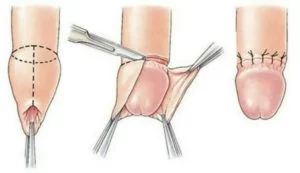
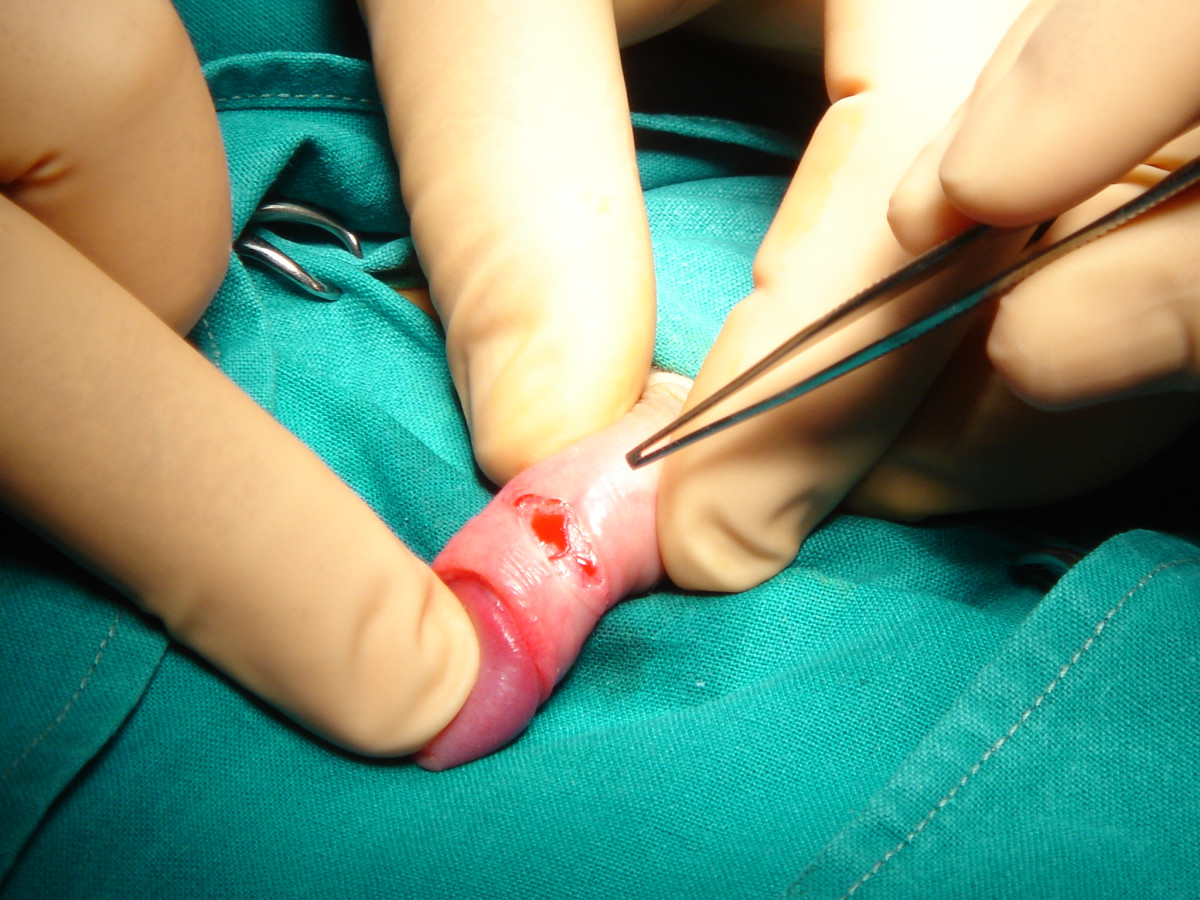
Treatment of phimosis | PhotoThe cure for phimosis is not amputation but circumcision. Currently, there are several types of circumcision developed by different surgeons. In general, a distinction is made between complete and incomplete circumcision, in which complete or partial circumcision of the foreskin occurs.

Experts believe that circumcision also reduces the likelihood of sexually transmitted diseases such as syphilis, genital herpes, and others. Circumcision facilitates the hygiene of the genital organs as sperm is released in a much smaller amount. Regarding the negative effects of circumcision, with poor-quality performance of the procedure and non-sterile instruments, as well as during other surgical procedures, it is quite possible that the wound will be complicated by the inflammatory process. Suppuration of the wound contributes to the proximity of the anus and poor hygiene in the postoperative period. Circumcision is sometimes accompanied by deformation of the genital organs. Incorrect execution of the procedure, such as cutting off more than necessary area of the skin fold, can cause stretching of the skin covering the penis and deformity of the penis.

The risk of these complications is minimized in the hands of experienced surgeons. Therefore, one should not be afraid of the possibility of complications of surgical procedures. It is recommended to realize the need for surgery and consult a specialist doctor to solve the problem.


Karazanashvili Robotic Center  offers treatment for phimosis using methods in accordance with the standards of world medicine.
Contact us

Karazanashvili Robotic Center is the only clinic in the Caucasus where robotic surgeries are performed.

  • Phone: (+995) 322 23 40 23
  • WhatsApp: (+995) 595 23 30 23
  • E-mail: [email protected]
  • Follow us on Facebook
  • Follow us on Instagram
  • Follow us on LinkedIn
Book a visit

Book an appointment with a doctor in advance. Our operator will contact you regarding the details and conditions of your visit.

Our branches

Karazanashvili Robotic Center operates five branches — in Tbilisi as well as in Batumi, Kutaisi and Zugdidi.

  • Tbilisi, 1 Chachava Street, 9th floor
  • Tbilisi, Vake-Saburtalo branch: 2 Danelia Street
  • Batumi, 21 Lech and Maria Kaczyński Street
  • Kutaisi, 124 Rustaveli Avenue
  • Zugdidi, 9 Gamarjveba Street
Robotic surgery

Karazanashvili Robotic Center is the first robotic surgery center in Georgia and the Caucasus, where the most complex robotic surgical procedures are performed on the organs of the genitourinary system and abdominal cavity.

ShareTweetSendShareSend
Previous Post

Urinary disorders

Next Post

Guram Karazanashvili: Prostate cancer, when diagnosed early, is almost 100% curable

პროსტატის კიბო რა არის
Deseases

Prostate Cancer – Non-Surgical Treatment

რა კავშირშია ქუთუთოების შეშუპება თირკმლის პრობლემებთან
Deseases

What Is the Connection Between Eyelid Swelling and Kidney Problems?

მამუკა მგელიაშვილი. საშვილოსნოს ან საშოს დაწევა
Deseases

Vaginal or uterine prolapse, urinary incontinence

Цистит – воспаление мочевого пузыря
Deseases

Cystitis – Inflammation of the Bladder

Leave a Reply Cancel reply

Your email address will not be published. Required fields are marked *

No Result
View All Result

NEWS

ტექნოლოგიური ჯაჭვი ერთ სივრცეში – როგორ შეცვალა ქარაზანაშვილის რობოტულმა ცენტრმა ქართული მედიცინის რეალობა
News

The Technological Chain in One Place — How the Karazanashvili Robotic Center Changed the Reality of Georgian Medicine

ლიმფური კვანძები
კატეგორიის გარეშე

The Importance of Lymph Nodes in Oncourological Patients and the Role of Karazanashvili Robotic Center

რობოტულ ქირურგიაში – ყველაზე დიდი გამოცდილება საქართველოსა და კავკასიაში.
News

The greatest experience in robotic surgery in Georgia and the Caucasus.

პროსტატის კიბო – დიაგნოსტიკა და მკურნალობის თანამედროვე მეთოდები
News

Prostate Cancer – Modern Methods of Diagnosis and Treatment

ახალი, ხელოვნური შარდის ბუშტი – რობოტული ქირურგიით! საქართველოსა და კავკასიაში მხოლოდ ჩვენს კლინიკაში!
News

The pinnacle of robotic surgery development in the Caucasus — exclusively at Karazanashvili Robotic Center.

პროსტატის კიბო | პროფესორი გურამ ქარაზანაშვილი BMG Drive-ში
News

Prostate Cancer | Professor Guram Karazanashvili on BMG Drive

2026 © ქარაზანაშვილის რობოტული ცენტრი

  • Home
  • About Us
    • Hospital
    • Doctors
    • Medical Equipment
    • Administration
    • Quality Control
  • Our Branches
    • Dighomi Branch
    • Vake-Saburtalo Branch
    • Kutaisi Branch
    • Zugdidi Branch
    • Batumi Branch
  • News
  • Services
    • Urological Hub
    • Gynaecological Hub
    • Oncology
    • Surgery
  • For Patients
    • Manager
    • Symptoms
    • Deseases
    • Medical Examinations
    • Treatment Methods
    • Insurance
    • Healthcare Programs
    • Online Consultation
    • Book an Appointment
  • For Doctors
    • Guidelines
    • Scientific Studies
  • Patient stories
  • Contact information
  • Book an Appointment
No Result
View All Result
  • GE
  • RU

2026 © ქარაზანაშვილის რობოტული ცენტრი