



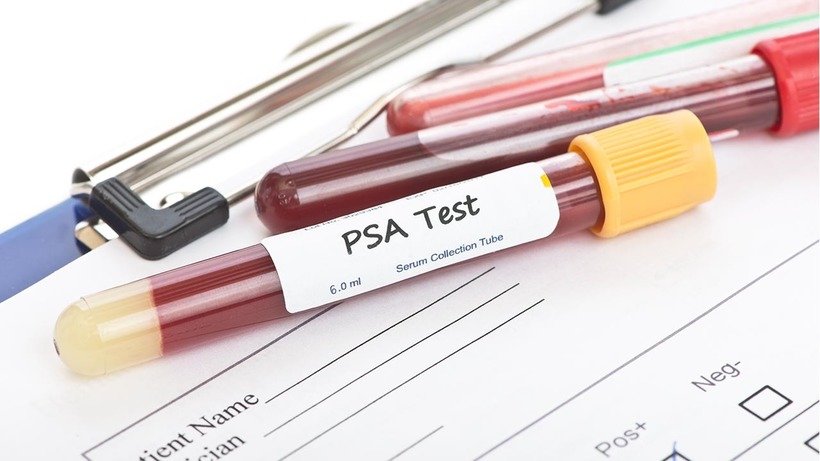
PSA: A Prostate-Specific Marker with Multiple Functions
PSA (Prostate-Specific Antigen) is a sulfur-containing protease. It is produced by the cells of the prostate gland and is secreted into the seminal fluid.
The main function of this protein is to liquefy seminal fluid; without PSA, the semen would have a thick, gel-like consistency.
Under normal tissue architecture of the prostate gland, only a minimal amount of PSA enters the systemic circulation. In the blood, it typically exists in two forms: free PSA (5–35%) and bound to protease inhibitors (65–95%).
As a result of structural disruption of prostate tissue, a large amount of PSA enters the bloodstream, meaning its level in the blood increases. Thus, this protein is not actually a cancer-specific marker, but rather a prostate-specific marker.
Its level in the blood can increase in cases of both malignant prostate tumors and benign hyperplasia, as well as inflammatory processes of infectious origin.
PSA levels in the blood can also rise after certain manipulations involving the prostate, such as massage, biopsy, transurethral resection of the prostate, and other interventions.
In the case of malignant prostate tumors, the concentration of this prostate antigen in the blood increases. This rise occurs due to the disruption of the prostate’s architecture and increased vascular permeability, rather than an increase in its production. In fact, tumor cells produce significantly less PSA compared to healthy prostate cells.
A Little Bit of History
About half a century ago, scientists were searching for markers that would be useful during court proceedings related to cases of sexual assault.
Others were interested in finding antigens related to male infertility.
There were also researchers who aimed to discover markers for benign and malignant changes in prostate tissue.
In any case, everything led to one result—by the 1980s, around 10 groups of scientists “came across” PSA. Each scientist had their own name for the substance.
The determination of the antigen’s name ultimately fell to Richard Ablin, who was studying both healthy and cancerous prostates.
In 1984, Chu Min was granted a patent for the discovery and identification of “prostate-specific antigen.” Together with his colleagues, he conducted numerous studies to confirm that PSA could be used for various diagnostic purposes. For these works, Chu Min later received several awards, including from the American Urological Association, the American Foundation for Urological Diseases, and other medical, scientific, and professional organizations.
PSA (Prostate-Specific Antigen) – What Is Its Level Dependent On?
The risk of the presence of malignant prostate cancer varies depending on the level of prostate-specific antigen. As a result, the question arose – which PSA concentration should be considered as the threshold, or at what level should a biopsy be recommended for the patient?
Considering that 97% of healthy men over the age of 40 had a PSA level of <4.0 ng/mL, this concentration was considered the threshold value in the 1990s. However, according to the latest recommendations from the European Association of Urology, the threshold for normal PSA levels has changed. Now, with the use of micro-ecography and core biopsy fusion, a PSA level is considered normal if it does not exceed 2 ng/mL. Therefore, PSA will be within the normal range, and there will be no suspicion of prostate cancer.
However, it should be noted that if the PSA level exceeds 2 ng/mL, this does not automatically indicate the need for prostate cancer or prostate biopsy. Each value should be considered in the appropriate clinical context.
With age, the concentration of this marker in the blood increases, which may be related to benign age-related prostate hyperplasia.
The production of PSA by prostate cells is influenced by androgens (male sex hormones). In patients treated with 5-alpha-reductase inhibitors for one year, the PSA level in the blood decreases by 50%.
The level of this specific antigen is also affected by factors such as racial background, age, body mass index, and other factors.
For example, compared to representatives of the European race, individuals of the Negroid race have much higher levels of PSA in their blood.
Those affected by obesity have a decreased PSA concentration, which is probably caused by an increase in estrogen levels.
In 2011, new data and approaches emerged regarding the necessity of PSA screening.
According to the decision of the American Urological Association, urologists must reconsider the necessity of PSA screening and, in general, the treatment approaches for prostate cancer.